
Richard O'Brien turned 84 on March 25, 2026. I thought it was worth marking the occasion — not with a biography, but with a memory. Because The Rocky Horror Show didn't just change theatre. It changed the way audiences behaved in the dark. It also changed my life.
Richard O'Brien didn't set out to start a revolution. He was performing in Jesus Christ Superstar at the Palace Theatre in London's West End, scribbling songs and scenes into a notebook in his dressing room. What emerged was a love letter to B-movies, science fiction, sexual liberation, and rock 'n' roll — wrapped in fishnet stockings and held together with audacity.
That notebook became The Rocky Horror Show.
It opened on June 19, 1973, at the Royal Court Theatre Upstairs — a 63-seat studio space above the main house in Sloane Square, London. The director was Jim Sharman, an Australian with a taste for the theatrical and the transgressive. Without Sharman, it's unlikely the show would have found its shape. He understood instinctively that the material needed to be played with absolute commitment — not as parody, but as a genuine emotional experience wrapped in camp and chaos.
The original cast included Tim Curry as Dr. Frank-N-Furter, Richard O'Brien as Riff Raff, Patricia Quinn as Magenta, Little Nell as Columbia, Jonathan Adams as the Narrator, Rayner Bourton as Rocky, and Julie Covington as Janet. It was raw, loud, cheap, and electric.
The show transferred almost immediately — first to the Classic Cinema on the King's Road, Chelsea, then to the King's Road Theatre, and eventually to the Comedy Theatre (now the Harold Pinter Theatre) in the West End. Each move brought a larger audience, but the energy never diluted. If anything, it intensified.
By the time the 1975 film adaptation arrived — again directed by Sharman, with most of the original London cast — Rocky Horror had already become a phenomenon. The film cemented it. Midnight screenings turned audiences into participants. People shouted back at the screen, threw toast, danced in the aisles, and dressed as their favourite characters. It wasn't just a show anymore. It was a ritual.
My Rocky Horror
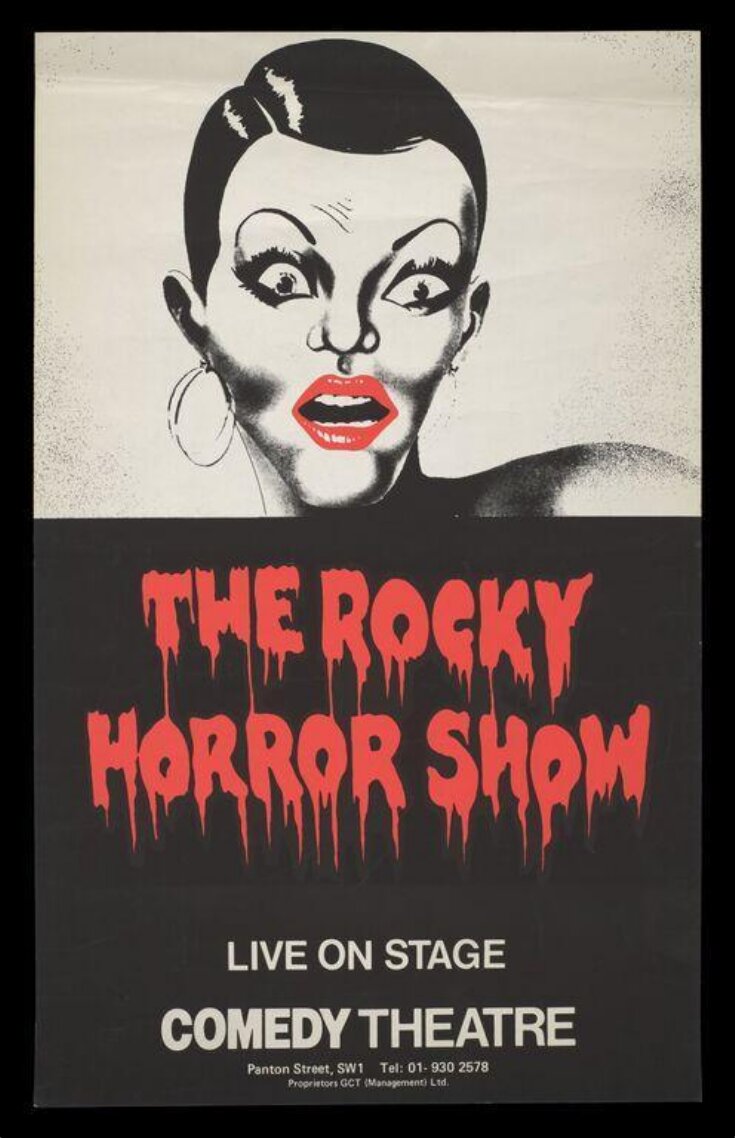
The Rocky Horror Show — Comedy Theatre, West End
I came into the show in 1978, as Stage Manager for the West End transfer. By that point, the production had already been running in various forms for five years. But it hadn't settled. It hadn't become safe. Every night was still a live wire.
The cast I worked with included Peter Blake as Frank-N-Furter and a young Tracey Ullman in the ensemble. Peter brought a dangerous, unpredictable energy to the role — less polished than Curry, perhaps, but raw and magnetic. You never quite knew what he was going to do, and that uncertainty kept the show alive.
Tracey Ullman was already clearly destined for bigger things. Even in a supporting role, she had a presence that pulled focus without trying. She was funny, sharp, and utterly fearless — qualities that would define her career.
Stage managing Rocky Horror was unlike anything else I'd experienced. The show had a rhythm, but it also had a wildness that resisted control. The audience was part of the performance. They shouted, they sang, they threw things. You couldn't plan for it — you could only ride it.
There were nights when the energy in the room was so intense it felt dangerous. Not physically — but theatrically. The line between stage and auditorium dissolved. The fourth wall didn't just break — it never existed.
Beyond the West End
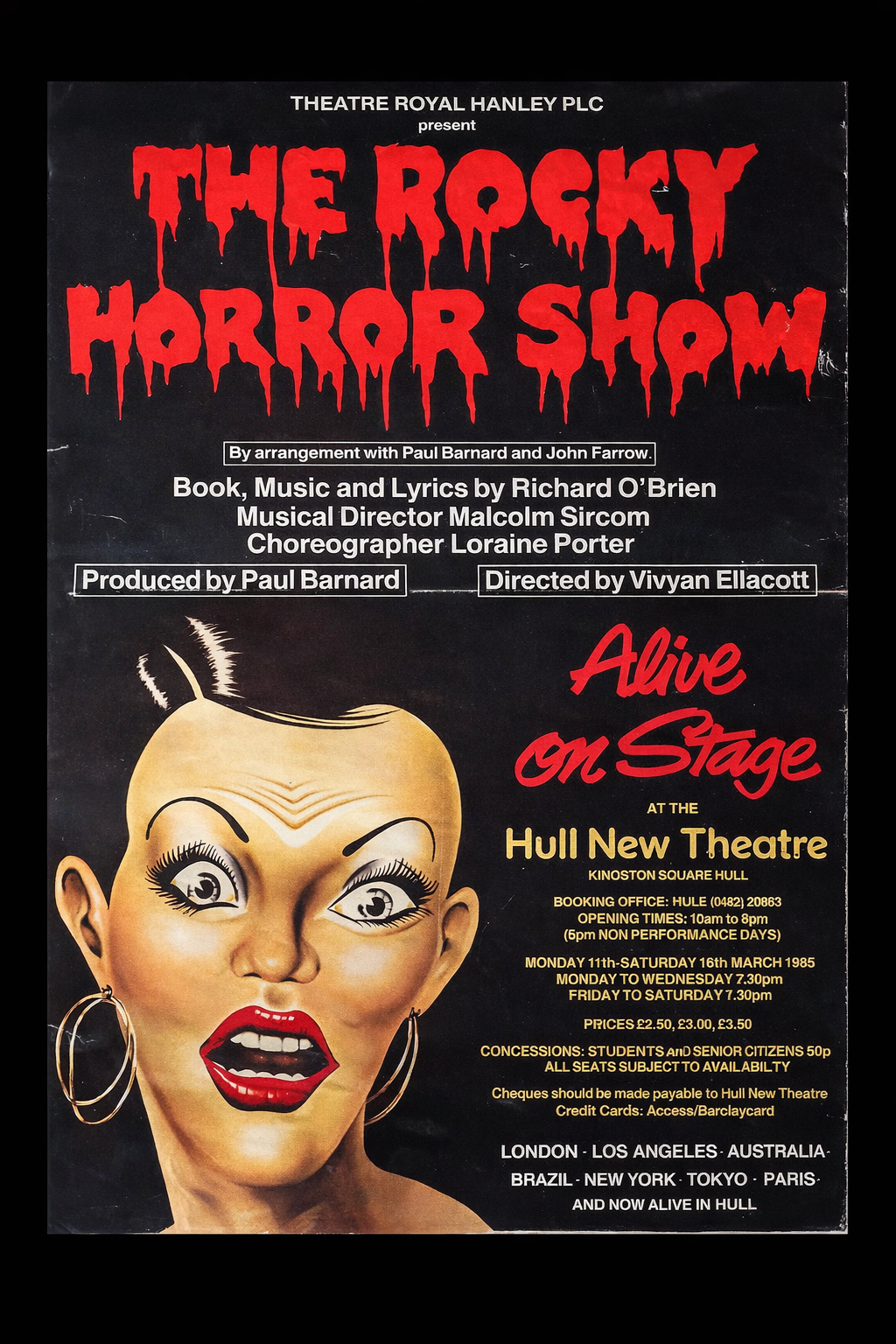
The Rocky Horror Show — Theatre Royal Hanley Tour
After the West End run, I went on to direct Rocky Horror in South Africa — a production that carried its own challenges and rewards. Taking the show to a different continent, a different culture, and a different political landscape forced me to think about what made it work at its core.
The answer was always the same: honesty. For all its camp and spectacle, Rocky Horror works because it's emotionally sincere. The characters feel real. The music is genuinely good. The themes of identity, desire, and belonging are universal. Strip away the costumes and the callbacks, and you're left with a story about outsiders finding their people — and the terror of being seen for who you really are.
A Postcard from Richard
Years later, I received a handwritten postcard from Richard O'Brien. It was brief, warm, and characteristically understated. I still have it. It's one of those objects that carries more weight than its size suggests — a small reminder of a shared experience that shaped both our lives in ways neither of us could have predicted.
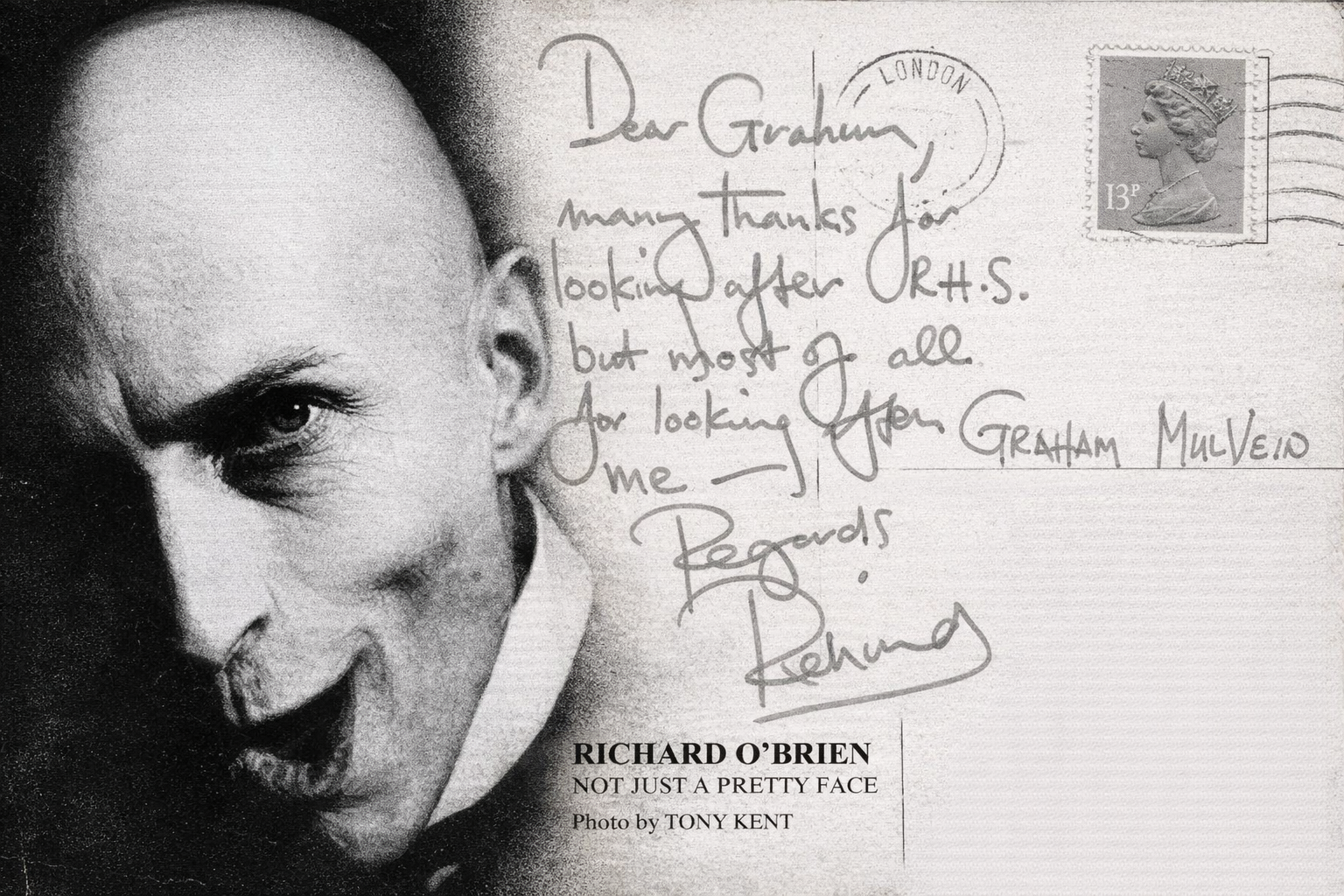
Richard O'Brien's postcard to Graham — “Thanks for looking after R.H.S.”
What Rocky Horror Taught Me About Writing
Rocky Horror taught me that audiences don't want to be passive. They want to be complicit. They want to feel that they're part of something — that the experience is happening with them, not at them.
That lesson has shaped everything I've written since. In my horror fiction, I try to create that same sense of complicity — the feeling that the reader isn't just observing the story, but is somehow inside it. That the darkness isn't on the page. It's in the room.
Rocky Horror also taught me that the best horror is never just about fear. It's about liberation. It's about the moment when the rules fall away and something raw and true emerges. That's what Frank-N-Furter represents. That's what the show represents. And that's what I try to capture in every story I write.
Richard O'Brien is 84. The show he wrote in a dressing room over fifty years ago is still running, still provoking, still refusing to behave. It has outlived trends, survived bad reviews, and transcended every attempt to categorise it.
It's not just a musical. It's not just a cult film. It's a living thing — an experience that reinvents itself with every new audience, every new cast, every new generation that discovers it.
And it all started with a notebook in a dressing room.
Happy birthday, Richard. The show goes on.
This article is part of Graham Mulvein's blog exploring horror, theatre, and the craft of storytelling.
You might also enjoy:
Why Haunted Houses Terrify Us — The Dark Psychology Behind Gothic Horror
Read Article →The Origins of Horror
Read Article →